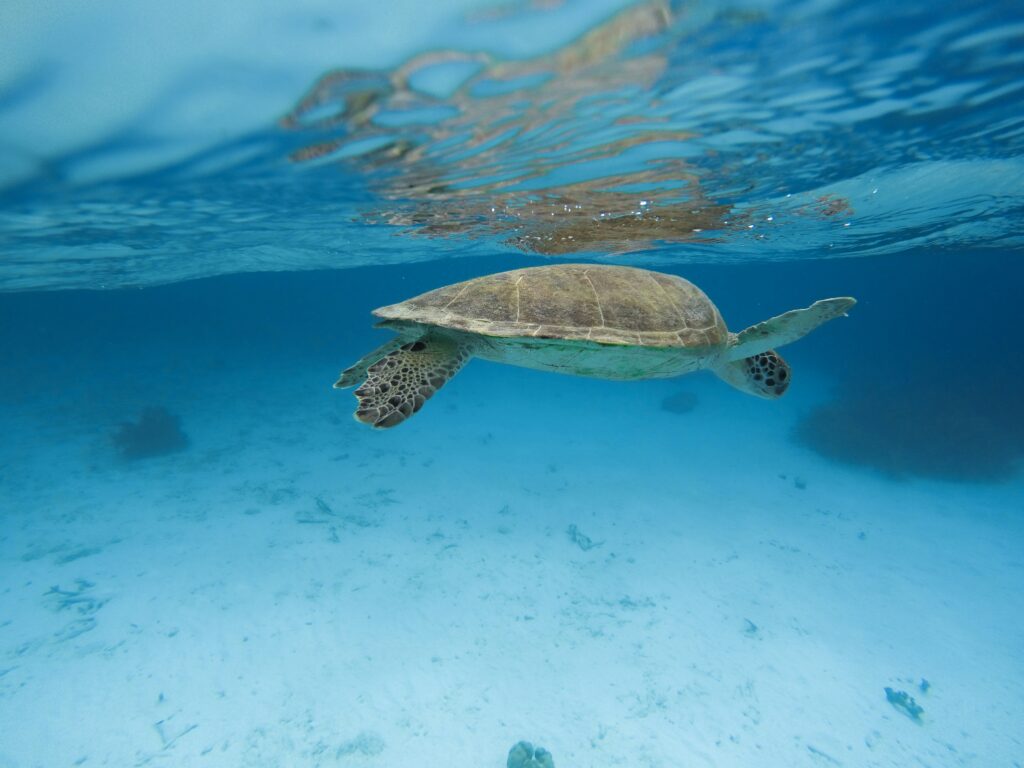
18 things to do in Bonaire from people who live here — shore dives, Lac Bay, the salt pans, Rincon, Klein Bonaire and where to eat. Practical tips, costs and how long each takes.
Things to Do in Bonaire: A Local's Guide
Bonaire is a small island — 40 km long, about 24,000 people — and most visitors come for one reason: the water. But we've lived here long enough to know that the guests who leave happiest are the ones who mix the reef with a few things on land. This is the list we send our own villa guests, with honest notes on what's worth a full day and what's a 20-minute stop.
Everything below is reachable by rental car (you'll want one; there's no real public transport). Distances are from Kralendijk unless we say otherwise.
In the water
1. Shore diving — the reason Bonaire exists on the map
Bonaire has 80+ marked dive sites and most of them start at the roadside: park, gear up, walk in. Yellow-painted rocks mark each entry. The whole coastline is inside the Bonaire National Marine Park, which is why the reef is in the condition it is. Two things first-timers need to know: you must pay the STINAPA nature fee before you dive (it's valid for the calendar year; check stinapabonaire.org for current rates), and you'll do a short orientation dive with a local operator before diving independently.
Good starter sites: 1000 Steps (it's 67 steps, not 1000, but you'll count every one carrying a tank), Salt Pier (only when no ship is docked), Bari Reef at the north end of town for sheer fish count, and Hilma Hooker, a 70-metre wreck sitting at 30 m.
Most of our villas have rinse tanks and dive lockers — Villa Bon Bonaire, Villa Tortuga and Villa Dos Hermanos were set up specifically for dive groups.
2. Snorkeling — same reef, no tank
If you don't dive, you still get most of the show: the reef starts in 2–5 m of water along much of the west coast. We've written a full guide to the best snorkeling spots in Bonaire, but if you only do one, make it Klein Bonaire (below).
3. Klein Bonaire by water taxi
The uninhabited island 800 m offshore. Water taxis leave from Kralendijk's waterfront several times a day and drop you at No Name Beach — white sand, no shade, no facilities, and some of the best easy snorkeling on the island. Bring water, a hat and reef-safe sunscreen. Half a day is enough.
4. Windsurfing and kitesurfing at Lac Bay / Sorobon
Lac Bay on the east coast is a shallow, waist-deep lagoon with steady trade winds and no waves — which is why beginners can learn to windsurf here in a morning and pros come for freestyle. Two schools on the beach rent gear and teach. Kitesurfing happens further south at Atlantis Beach. Sorobon Beach itself is one of the few genuinely sandy, swimmable beaches on the island.
5. Mangrove kayaking in Lac Cai
Guided kayak or SUP tours through the mangroves on the north side of Lac Bay — calm water, juvenile fish, upside-down jellyfish, the occasional turtle. Two to three hours, early morning is best for wind and light.
On land
6. Washington Slagbaai National Park
The northern fifth of the island. A 4×4 or high-clearance car is strongly advised (the "short" route is 24 km of rough track, the long one 34 km). You'll see flamingos in the saliñas, iguanas, parrots, wild goats, and the wild east-coast blowholes. Bring everything — there's one small visitor centre at the entrance and nothing after that. Plan 4–6 hours; the park closes mid-afternoon and you must enter before 2:30 pm. Entry is included in the STINAPA nature fee.
7. The salt pans and salt pyramids
The south of the island is a working solar salt operation: pink and turquoise evaporation ponds, blinding white pyramids, and the pier where salt is loaded onto ships. It's a drive-through experience — 30 minutes of stops for photos — and it's on the way to everything else in the south.
8. Pekelmeer flamingo sanctuary
Next to the salt pans. The sanctuary itself is closed to visitors (it's a breeding ground), but the flamingos feed in the open ponds along the road. Early morning or the hour before sunset, and bring binoculars or a long lens — the birds keep their distance.
9. Slave huts
Two clusters of tiny stone huts on the south-west coast, built in the 1850s to house the enslaved people who worked the salt pans. They're small, sobering, and worth ten minutes of silence. Combine with the salt pans.
10. Rincon and the Cadushy distillery
Rincon is the island's oldest village, inland and quieter than Kralendijk. Cadushy makes liqueur from cactus and does tastings in a garden courtyard. Go on a Saturday if you can — there's a small market and it's when Rincon is at its liveliest. If you're here in April, the Dia di Rincon festival is the island's biggest cultural day.
11. Kralendijk itself
Small, pastel, walkable in 20 minutes. The Terramar Museum on the waterfront is a well-done hour on the island's history. The Wednesday-morning craft market near the cruise pier is fine; skip it on cruise days if you dislike crowds.
12. Donkey Sanctuary
On the road to Lac Bay. Around 700 rescued donkeys, a drive-through route and a walking area. It's a genuine rescue operation, kids love it, and it's an easy hour.
13. Seru Largu viewpoint
A ten-minute drive up from town for the best view of Kralendijk and Klein Bonaire. Best at sunset.
14. 1000 Steps and the north-west coast drive
Even if you're not diving, the coastal road north of Kralendijk past Karpata to the Goto Lake viewpoint is the prettiest 30 minutes of driving on the island. Goto Lake usually has flamingos too, and closer than at Pekelmeer.
Eating and drinking
15. Waterfront dinner in Kralendijk
The boulevard has a dozen good options; most have tables on the water. Book ahead in high season (December–April) — restaurants are small and fill up.
16. Lac Bay beach bars
Lunch at Sorobon after windsurfing or kayaking. Slow, sandy, exactly what you want.
17. Food trucks and local kitchens
Kabritu stoba (goat stew), fresh fish, and funchi are the dishes to look for. Ask us for the current favourites — they change.
A few practical notes
- Sun: Bonaire is 12° north of the equator. Reef-safe sunscreen only (oxybenzone products are banned).
- Cars: Book your rental before you fly in high season; pickups run out. We can arrange one with a partner discount.
- Cash and cards: US dollars are the currency. Cards work almost everywhere in town, less so at food trucks.
- When to go: See our month-by-month guide to the best time to visit Bonaire.
Where to stay
All of the above is within 40 minutes of any of our villas. If you're a dive group, ask for Villa Bon Bonaire or Villa Tortuga (rinse tanks, lockers, private pool). Families tend to prefer Sabadeco — Crown Villas 16 and 19 — for the quiet and the pool. Staying a month or longer? See our long-term rentals.
[Browse vacation villas →] [Ask us a question on WhatsApp →]
FAQ
How many days do you need in Bonaire? A week is the standard dive trip. Five days covers the reef plus one land day. Many of our guests stay two to four weeks in winter.
Is Bonaire good for non-divers? Yes, if you like water — snorkeling, windsurfing, kayaking — and quiet. It is not a nightlife or shopping island.
Do you need a car in Bonaire? Yes. There's no bus system and taxis are expensive. A pickup truck is the standard dive rental.
Is Bonaire in the hurricane belt? No — it sits south of the main track, which is why the dive season runs all year.